

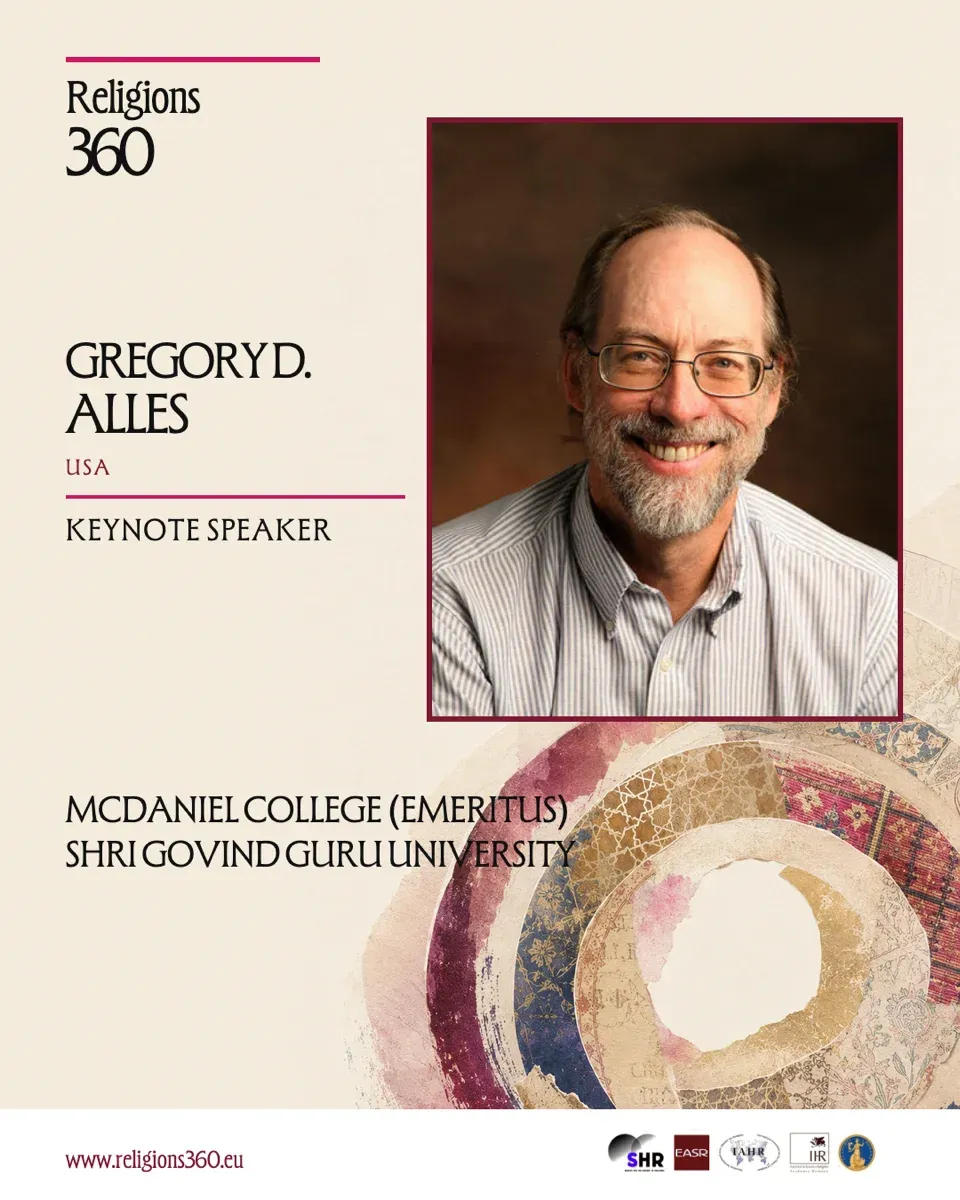
Gregory D. Alles
Slow Translation and the Study of Religions: Promise and Perils
For the past two centuries, translation has played a major role in the study of religions. Scholars of religions, not to mention theologians, have devoted a considerable amount of attention to translating not just texts but the broad range of what people say, do, and make religiously into terms that they, their colleagues, students, and readers utilize and understand. This talk will advance a particular model of scholarly translation, utilizing the designation “slow translation.” It will argue that much scholarly translational work is only half done. In addition to examining what other people say, do, and make, scholars need to devote similarly serious, critical attention to themselves. To illustrate this position, the talk will draw upon fieldwork among Adivasi (Indigenous) people in eastern Gujarat, India. A concept central to their self-identity is prakrti, which local English speakers designate “nature.” What they mean by nature should not be taken as self-evident, for, as Raymond Williams has famously written, “Nature is perhaps the most complex word in the [English] language.” One cannot, then, immediately assume that Adivasi conceptions of nature conform to unproblematical notions in English. Nor can one assume that, as Indigenous people, their notions of nature are commensurate with claims about nature found among Indigenous peoples in the settler states of North America, Australia, and Aotearoa-New Zealand. Making sense of what Adivasis in eastern Gujarat are saying and doing when they identify with nature and worship it requires at the same time a critical interrogation of the notion of nature in the target context, in the case of the speaker, western European and North American traditions of conceptualizing nature. Implicit in this approach is a more general methodological suggestion. If the study of religions is ever to be decolonized, scholars of religions need to give similar attention to other terms as well. Otherwise, they risk continuing to employ European-Christian, and increasingly Anglophonic, folk categories as if they constituted an adequately tested scholarly vocabulary.